
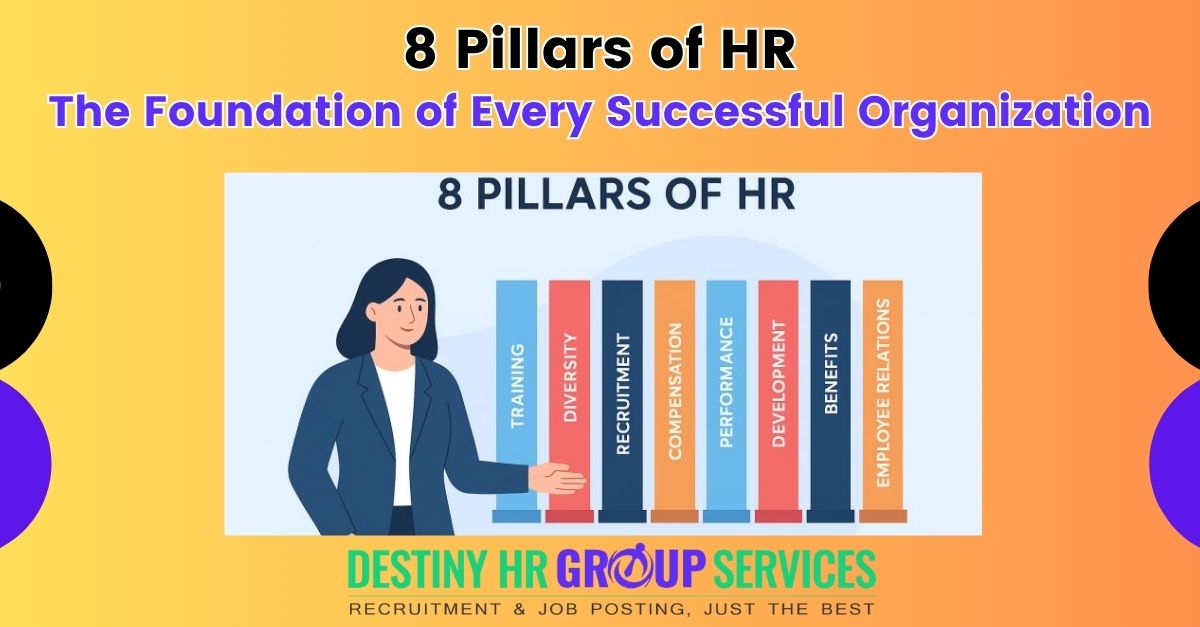
8 Pillars of HR: The Foundation of Every Successful Organization
In today’s competitive business landscape, Human Resources (HR) has evolved from being just an administrative department to becoming the backbone of every successful organization. The HR function ensures that employees remain motivated, productive, and aligned with the company’s vision. To achieve this, HR professionals rely on certain key principles—often referred to as the 8 Pillars of HR.
These pillars form the foundation of effective human resource management, helping businesses attract, develop, and retain top talent. Let’s explore each one in detail.
1. Recruitment and Selection
The first and most critical pillar of HR is recruitment and selection, forming the cornerstone of every successful organization. Finding the right talent is essential for building a strong and sustainable workforce. A well-defined recruitment process ensures that companies hire individuals with the right skills, cultural fit, and long-term potential.
Modern recruitment goes beyond posting job ads—it includes proactive talent sourcing, employer branding, and professional IT Recruitment Services that streamline the hiring process. Partnering with recruitment agencies like Destiny HR Group, which specialize in connecting companies with skilled professionals in the IT and corporate sectors, helps businesses secure top-tier candidates quickly and efficiently.
2. Training and Development
Hiring talented employees is just the beginning. Continuous training and development empower employees to enhance their skills and adapt to evolving industry trends. Whether through workshops, online courses, or mentoring programs, organizations that invest in employee growth witness higher engagement and productivity.
This pillar ensures employees remain competent and confident in their roles, directly impacting business success.
3. Performance Management
Performance management is all about evaluating employee performance to ensure goals are met effectively. It includes setting clear expectations, providing regular feedback, and conducting performance reviews.
An efficient performance management system not only identifies top performers but also highlights areas for improvement. When employees understand how their work contributes to the company’s success, they feel more motivated and accountable.
4. Compensation and Benefits
Attracting and retaining skilled employees requires fair and competitive compensation and benefits. This pillar includes salaries, incentives, health benefits, bonuses, and other rewards that recognize employee contributions.
A well-structured compensation strategy aligns with market standards while ensuring internal equity. It also plays a key role in boosting morale, reducing turnover, and enhancing job satisfaction.
5. Employee Relations
Strong employee relations are essential for maintaining a positive work environment. This pillar focuses on communication, trust, and respect between management and employees.
HR professionals act as a bridge, ensuring that employee concerns are heard and resolved promptly. Open dialogue, fair treatment, and grievance-handling mechanisms foster harmony and reduce workplace conflicts.
6. Compliance and Legal Framework
Every organization must adhere to labor laws, workplace regulations, and ethical standards. The compliance and legal framework pillar ensures that companies operate within these boundaries, avoiding potential lawsuits or penalties.
HR departments manage policies related to wages, discrimination, workplace safety, and data protection. Maintaining compliance protects both the organization and its employees while reinforcing trust and integrity.
7. Workforce Planning and Analytics
In a world driven by data, HR analytics and workforce planning have become vital. This pillar involves forecasting staffing needs, analyzing employee performance data, and making informed decisions to optimize workforce efficiency.
By using HR analytics tools, organizations can identify skill gaps, predict turnover, and plan future hiring needs effectively. This proactive approach helps maintain workforce stability and long-term growth.
8. Employee Engagement and Retention
Finally, the employee engagement and retention pillar focuses on keeping employees motivated and loyal. Engaged employees are more productive, innovative, and committed to organizational goals.
HR teams create engagement strategies through recognition programs, career development opportunities, and a healthy work-life balance. When employees feel valued and appreciated, they are more likely to stay and grow with the company.
Conclusion
The 8 Pillars of HR—Recruitment, Training, Performance Management, Compensation, Employee Relations, Compliance, Workforce Planning, and Engagement—work together to create a strong, dynamic, and people-focused organization.
At Destiny HR Group, we understand that great people are the foundation of great companies. Our HR and recruitment solutions are designed to help businesses build high-performing teams while ensuring employee satisfaction and long-term success.
Whether you’re a growing startup or an established enterprise, strengthening these HR pillars will lead to better employee experiences and sustainable business growth.
